Like humans, cats with allergies can experience symptoms that affect their breathing, ranging from a bit of discomfort to a medical emergency. With preventative measures and daily medication, your cat can live a full life without the constant risk of a medical emergency.
What is asthma?
Asthma is a chronic respiratory condition that causes inflammation and narrowing of the airways. When triggered by an allergen (such as dust or pollen) or irritant (such as smoke or perfume), your cat can have an asthma attack that makes it difficult to breathe. Without medication, a severe asthma attack can be life-threatening if it is not treated urgently.
If your cat is having a life-threatening attack (they are not getting enough air in or their gums are turning blue) bring them to an emergency vet clinic right away.
Asthma in cats
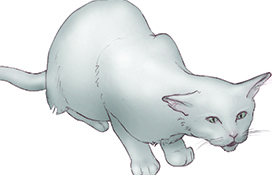
Asthma attacks can look different in cats than in humans. They can look similar to spitting up a hairball. Since cats can’t express their discomfort and needs, knowing the signs and symptoms of an attack is essential so you can respond quickly. Symptoms of feline asthma include coughing, heavy breathing, wheezing breaths, breaths moving the stomach rather than the chest, and blue gums. Often, cats will also crouch close to the ground and move their head as if they were gagging or vomiting. These symptoms and actions may look like the cat is trying to pass a hairball, but the crouching means it is more likely to be respiratory distress.
Symptoms can start mild and be short-term, or they can spiral into a medical emergency. Noticing symptoms early and working with your vet to find the best solutions for your pet are key to ensuring your pet can live a healthy life despite their asthma.
Prevention
Once your cat has received an asthma diagnosis, the next step is to limit triggers in your home, so they won’t need extensive medication or have as many asthma attacks. Maintaining a clean environment by dusting and vacuuming will limit the presence of dust and dust mites that may be causing attacks.
If you or a family member smokes, doing it outside will prevent your cat from being exposed to cigarette smoke, which can trigger an attack. While there is less research about the effects of e-cigarette vapor around pets, generally, you should avoid vaping near your cats’ living area.
For cats who mainly spend their time indoors, outdoor allergic triggers can enter your home through open windows. Weather sites and channels provide alerts about air quality and pollen levels, which you can consult before opening your windows to let outside air in. Additionally, an air purifier can help maintain good air quality indoors, but it does not replace cleaning and limiting triggers.
Lastly, you can use dustless and hypoallergenic cat litter, if you aren’t already. Speak to your vet about what options will work best for you and your pet.
Medication
Once your cat is diagnosed with asthma, medication will become a primary tool in preventing attacks. Daily anti-inflammatory medication will help prevent inflammation in their airways and keep them clear to prevent difficulty breathing.
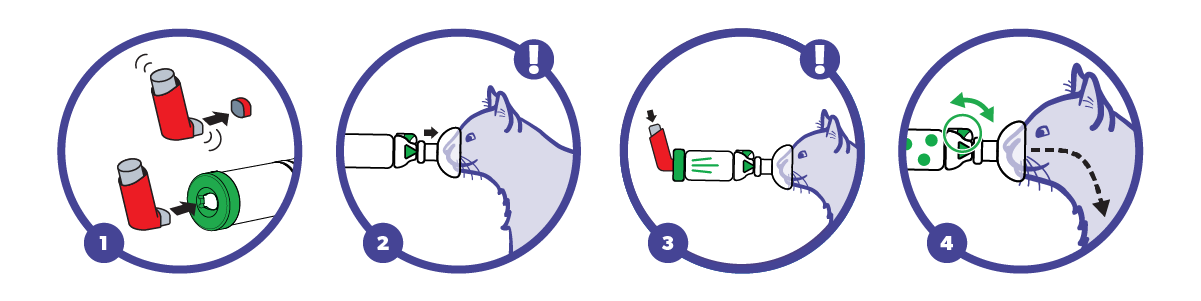
While the medication can be administered orally, it is easier over the long term for the cat to use a feline inhaler. The two parts, the inhaler and the aerosol chamber, work together to deliver the medication deep into the cat’s lungs as they breathe. However, because cats dislike objects touching their face, they may need to get used to it gradually.
Start practicing a week before administering the first dose, to ensure your cat has the most positive experience leading up to using the inhaler. To begin, get your cat used to the detachable mask, the portion that will be directly touching the cat’s face. You can do this by having your pet reach for treats within the mask. If your cat is addicted to Churu tubes, spreading some on the inside of the mask and holding it up for your cat to lick is a great way to create positive associations with the mask.
Next, practice holding the detached mask against the cat’s face as you support them on your lap. The cat should get used to breathing room air through the mask before you attach the rest of the chamber. Discuss with your veterinarian other ways to adjust your cat to their medication routine.
How to Use a Cat Inhaler
- Remove the safety cap from the inhaler.
- Shake the inhaler well for 5 to 10 seconds, then insert it into the right end of the aerosol chamber.
- Place your cat on your lap, in a towel, or on a soft surface.
- Place the aerosol chamber mask around your cat’s nose and mouth. Ensure that you have a good seal around your cat’s face.
- Deliver the prescribed number of puffs of medication into the chamber. If your cat reacts to the noise, try delivering the puffs while holding the chamber away from your cat, then placing the mask over their nose and mouth.
- Hold the inhaler mask in place for five to six breaths. Watch the indicator tab on the chamber to know whether your cat took a deep enough breath to inhale the medication.
To continue your cat’s positive association with the inhaler, provide their favourite treats after the dose is delivered.